

How Essays Work, Sometimes

Occasionally, essays grow out of the random accumulation of unrelated ideas that become, in Samuel Johnson’s phrase, “yoked by violence together.” Think of four horses harnessed to the same wagon, each wanting to go off in a different direction, but forced by the driver to pull in the same direction. The horses are the ideas, the wagon is the essay, and the poor writer is the one wielding the bullwhip.
In the case of the essay you’re reading, Horse One was finding a copy of Unpacking the Boxes, a memoir by American poet and essayist Donald Hall, on the sale table at the San Miguel public library. It was priced at 40 pesos, about three Canadian dollars. Actually, Merilyn found it and brought it over to me, knowing I would want it.
Horse Two was the fact that the day we brought the book home and I began to read it was also the day of the first game of the World Series, played by long-time rivals, the Los Angeles Dodgers and the New York Yankees. I know this seems unrelated, but it isn’t.
Horse Three was my fondness for Donald Hall’s writing, especially his writing about baseball. Hall’s second book of essays, Fathers Playing Catch With Sons, was subtitled, Essays on Sports (Mostly Baseball). The essays deal with Hall’s lifelong love of the game, ever since playing backyard catch with his father, who was a devoted Brooklyn Dodgers fan (the Dodgers moved from Brooklyn to Los Angeles in 1958). Unpacking the Boxes begins with memories of those early days in Connecticut, and continues through the decades to 2006, the year Hall was appointed Poet Laureate of the United States. The sudden fame that came with the laureateship – interviews on PBS and NPR, a Wall Street Journal editorial, a New York Times profile that called him “a well-known scourge of the religious right” – astounded him; he calls it “my Warholian fifteen minutes, and it lasted well into August.” He died in 2018.
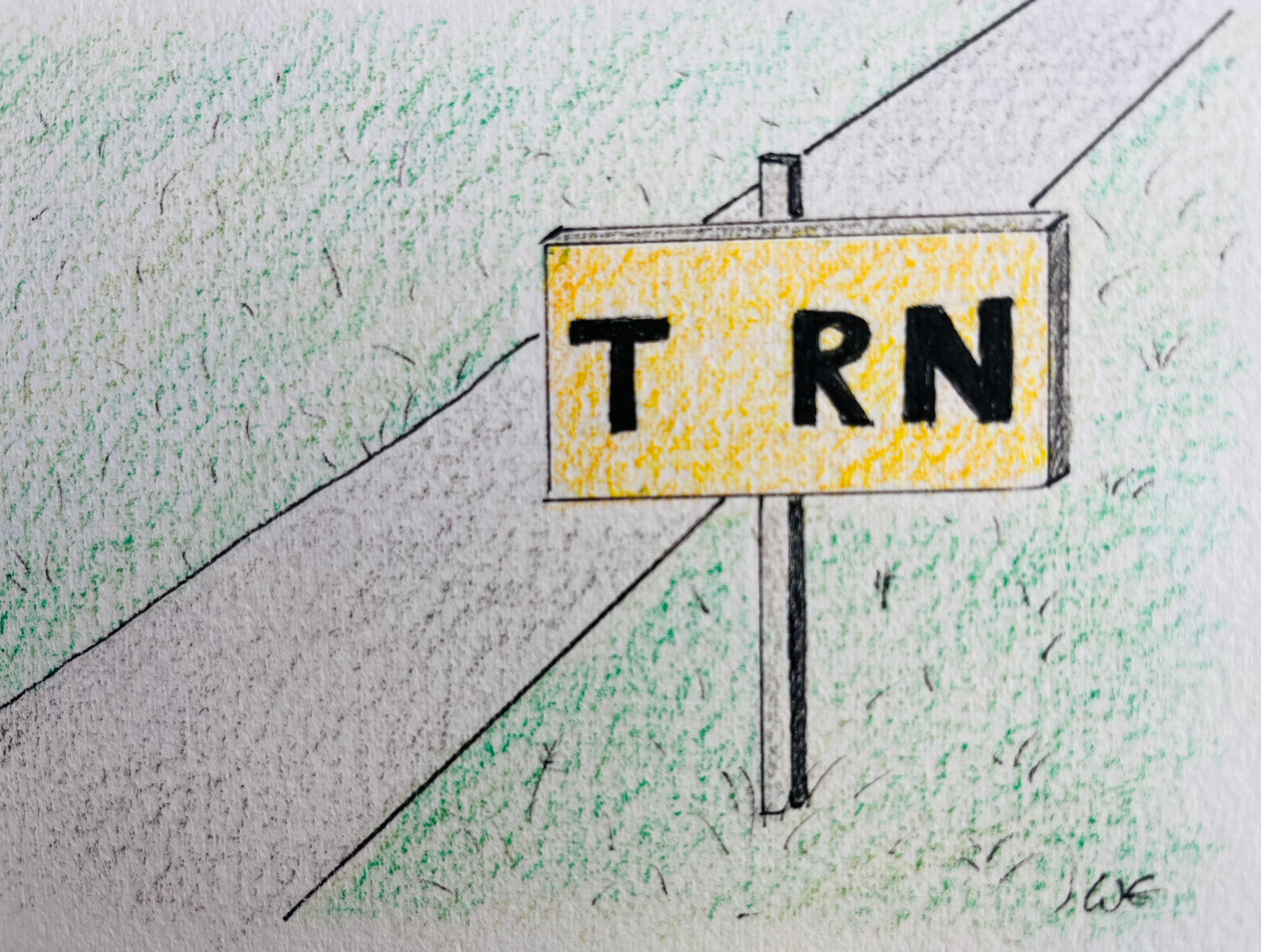
Drawing by Wayne Grady
Horse Four was when I began reading Unpacking the Boxes while waiting for the baseball game to begin. I opened the book at random and read a passage in which Hall is making weekly visits to his dying father in the fall of 1955. Hall’s first book of poems, Exiles and Marriages, had just been accepted by Viking, and as galleys came from the publisher, Hall showed them to his father. “The progress of Exiles distracted him,” writes Hall, “and in October so did baseball, when we watched television while our Brooklyn Dodgers took a flickering seven-game World Series triumph over the Yankees.”
The Dodgers and Yankees in 1955, and now the Dodgers and Yankees this year, and Donald Hall tying the two together. We tend to dismiss coincidences, but this seemed more than a coincidence. It seemed closer to what Karl Jung called synchronicity, which he defined as “circumstances that appear meaningfully related yet lack a causal connection.” I would add: that lack an immediately obvious causal connection, because often we don’t see the connection until we start writing the essay.
I first read Donald Hall in 1985, just after I started working for Harrowsmith magazine. A writer friend gave me a copy of Hall’s first book of essays, String Too Short to Be Saved, saying that since I was editing a rural-themed magazine I ought to become familiar with great rural-themed writing. I’d written a lot of nonfiction before that, but Hall’s sharply observed yet laconic writing style drew me in as an outfielder reels in a fly ball. Hall showed me that deeply felt essays can be triggered by the smallest, seemingly inconsequential events. The title essay starts shortly after his grandparents died, when the Hall is cleaning out their house in New Hampshire. In the attic, he finds a shoebox filled with tiny bits of string, none more than a few inches long. On the box is written: “String too short to be saved.”
Hall connects that box with the essay form: essayists don’t throw anything out. They save bits of their lives that seem trivial, but which touch some deeper chord in them that reverberates into literature. Saving the past, including people from the past, is one of the important functions of Hall’s essays, he says, because “to be forgotten must be the worst fate of all.”
Inspired by Hall’s celebration of rural matters, I edited two sections of Harrowsmith: I introduced the Editor’s Page, in which I wrote about my own experiences of living in rural Ontario; and I revivified a section called “Screed,” which was reserved for creative pieces such as those written by Hall. For one Editor’s Page, I wrote about the highly codified way rural drivers wave when passing one another on a country road. Leaving the palm of the hand on the top of the steering wheel, a driver will raise one finger to wave at someone they don’t know; two fingers to someone they recognize but haven’t met; three fingers to a neighbour; four fingers to the driver of the snow plough or the milk truck; and all five fingers to close friends, ministers, and the woman who drives the school bus. For the Screed page I published an essay by Merilyn, in which she wrote about her grief at leaving her home in northern Ontario, an essay I later included in the anthology, Treasures of the Place.
Donald Hall taught me how to see the country, which is to see the beautiful and the profound in the daily detritus of living, and how to write about it, how to get all the horses pulling together. There is not a huge gap between creative nonfiction and poetry. Donald Hall’s essays, though they appear casually written, are tightly woven tapestries that gain in significance as the work progresses. Though primarily a poet, his prose glows with the intensity of poetry. Of poetry he has said: “There is no other purpose than the beauty of it. And that is reason enough to be.” The same is true of the best essay writing.
And it’s also true of baseball.
How to get all the horses pulling together…lovely, Wayne. And like David and you, Matt is always near by.xc
Wonderful. Thank you.