

Flight Response

In one of my novels, a character named Max Llif is a passenger on an Air Canada flight to Buenos Aires. Somewhere over the Grand Canyon, the plane suddenly begins to lose altitude. As the aircraft falls sharply downward, the seatbelt lights come on, Llif’s gorge rises into his throat, and passengers around him are panicking. After a few seconds, the plane levels off and the captain comes on the intercom and says, “Just an air pocket, folks, nothing to worry about.” And the flight continues as if nothing has happened.
Except that Llif is convinced that the plane did not level off, that it did, in fact, crash into the ground and everyone on board, including himself, has died. “This is what death is,” he thinks, “a sudden, unexpected blip after which life apparently goes on as normal, only it isn’t life anymore, it’s a simulacrum of life.” For the rest of the flight, and it’s a long flight, he can’t shake the idea that he is dead. “After dying,” he thinks, “your life goes on as usual, except you are in a kind of perpetual loop, a continuous playing out of the forces that have, almost incidentally, already caused your death.”
I’m not a nervous flyer, and I wrote the novel long before Donald Trump fired 400 air traffic controllers and hundreds more were laid off during the U.S. government’s 42-day shutdown that ended on November 12. According to the Federal Aviation Authority, there has been a 58-percent increase in airplane crashes in the U.S. this year – 6.8 crashes per 100,000 flight hours, compared to 4.3 per 100,000 in 2023. At 24 million flight hours a year, that makes 188 airplane crashes in the U.S. in the past 11 months. But I’m still not nervous about flying. I don’t fly in the U.S. Even so, on our flight from Toronto to Mexico City earlier this month, I sat calmly watching the movies on four other passengers’ seat-back screens, without sound, trying to guess the plot lines and idly wondering whether or not I was still alive.
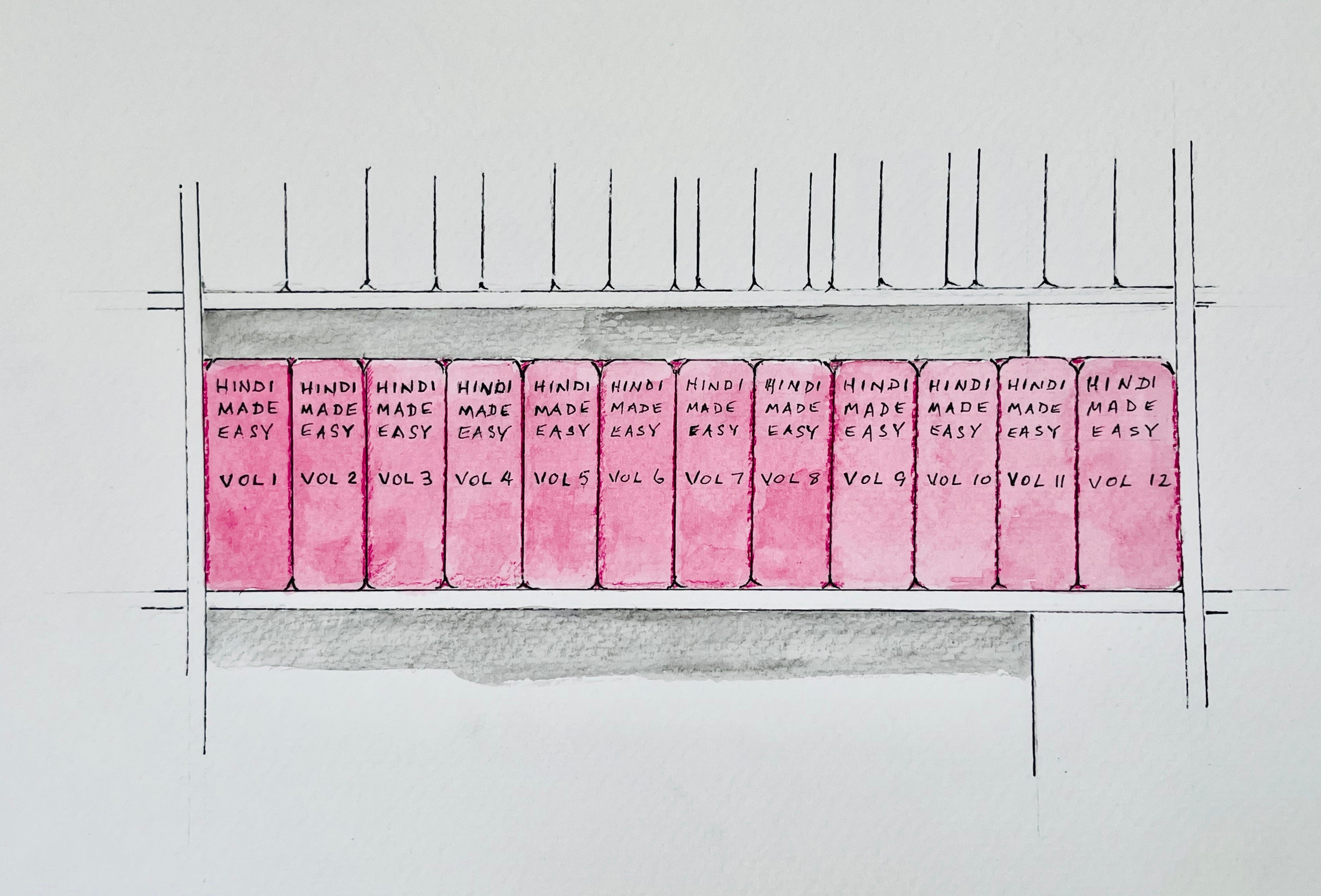
Drawing by Wayne Grady
In “Flying Home,” one of the essays in Edwidge Danticat’s Create Dangerously: The Immigrant Artist at Work, Danticat confesses to having “a dread of flying.” When her novels began to win prizes around the world she spent weeks on the road, sometimes taking two flights a day. On long flights, she writes, she would arrange to fly in the late afternoon or early evening, so she could cover her head with a blanket and sleep until the plane landed. On one occasion, she “was in what felt to me like a near crash between Miami and New York.” The plane “began to nose dive as though it were being sucked down by a centrifugal force.” Just as in my novel, “people screamed, some shouting for help, others calling loved ones’ names, and still others shouting directly to God.” Eventually, the plane landed at La Guardia, and “the captain assured us that we had ‘only’ been caught in a wind shear.”
“While on those flights,” she writes, “I always imagine what the plane must look like to a very small child from the ground, a silvered speck racing across a flaming orange sky, nurturing the child’s own dreams of escape….” Associating flying with escape instead of, say, adventure, is reflected in the language: we call it “flight,” as in the biblical Flight from Egypt, or Iris Murdoch’s The Flight from the Enchanter. David Foster Wallace thought that our desire to travel, even for a vacation, was the result of our collective need to escape. All travel, he believed, was “an escape from,” rather than to “an escape to.”
If we think of reading as a kind of escape, then reading a book on an airplane is a double escape. I always resisted the idea of reading as a form of escape. The year I won a Governor General’s Award, the governor general at the time, Ray Hnatyshyn, thanked the writers in the room for “giving us the books we read on the beach and in the buses.” I was taken aback: is that how he sees us? As escape artists? I thought that literature wasn’t written to take you out of the real world, but to plunge you deeper into it.
This June I was invited to attend a session of Book Clubs for Inmates (BCFI) at Joyceville Institution, a minimum security prison north of Kingston, Ontario. BCFI was started by the late Carol Finlay, an Anglican priest who visited the prison at Collins Bay, in Kingston, in 2008 and proposed starting a monthly book club. Since then, Book Clubs for Inmates have been established in 36 prisons across Canada. The current executive director, Tom Best, has expanded BCFI by soliciting more than a quarter of a million books from Canadian publishers and distributing them to the various institutions. The library at Joyceville, for example, once a couple of shelves of abandoned paperbacks, now occupies two large classrooms, and provides literacy courses for inmates to complete their high-school diplomas while incarcerated.
After passing through three security check points with Tom and the prison librarian, I met with about 20 men who had joined the Joyceville book club and wanted to discuss my novel, Emancipation Day. Since my book came out in 2013 I have met with many book clubs, but none more enthusiastic, more focused, than this one. After I talked about writing the book, they began asking questions that made me think deeply about the import of my work. Who, they asked, is emancipated in the novel? Wasn’t it me, wasn’t I freeing myself by writing this book? If so, what does it mean to be emancipated? Interesting questions coming from a group of prisoners.
At the end of the meeting, one of the inmates – his name was Jesse – stood up to thank me for joining them. “Being incarcerated,” he said, “limits our choices, from what and when we eat, when we can see our families, right down to the colour of the shirt we can wear. Reading,” he said, “is one of the only decisions we can make that allows us to choose what and who we want to read. Your work allows us a temporary escape from incarceration. While we are in here, it is authors like you and the books you write that shed a light in these times of darkness, and allow us an escape into the stories you write. We thank you kindly for being our guest today.”
I realized then that, for people who are already detached from the world, in this case from life outside the prison but also for anyone who feels cut off from the kind of existence most of us take for granted, reading can be an escape, but an escape into the world. This places an onus on us as writers to ensure that the world our readers escape into is rich enough to sustain them.
Escape into the world -- I like that.