

Elbows Up!

Dominick Dunne’s 2001 book Justice, a collection of essays about famous trials in American history (mostly that of O.J. Simpson), ends with a strange, brief acknowledgement that 2001 was also the year of 9-11. Titled “Mourning in New York,” the essay ruminates on the after-effects of the attack by al-Qaeda on the World Trade Center. The attack was, of course, a brutal act of terror, but it also served to unite Americans, particularly New Yorkers, against a common threat from a readily identifiable enemy: Osama bin Laden.
“In all my life,” he writes, “I’ve never felt so proud to be a New Yorker. By the second day, people were buying flags and going to candlelight vigils. Acquaintances hugged one another on the streets. President Bush spoke powerfully at a prayer service at the National Cathedral in Washington, and our country united behind him.”
It strikes me now that Dunne’s depiction of how Americans responded to 9-11 sounds a lot like the response of Canadians to being threatened by Donald Trump, by his repeated references to Canada as the 51st state, and his arbitrary game of imposing and lifting tariffs on Canadian goods. We, too, bought flags and planted them on our front lawns and fluttered them from our car windows. We held rallies at which we joined arms and chanted patriotic slogans; we booed the American national anthem at hockey games; a third of us stopped wintering in Florida. “We’re insulted,” Mélanie Joly, Canada’s Foreign Minister, told the BBC. “We’re mad. We’re angry.” As did the U.S., we refused to let a foreign nation determine our future. “We cannot let our guard down,” said Joly. “We need to make sure that we fight back.”
Another way in which we fought back against American imperialism was by publishing a collection of 30 Canada-first essays called Elbows Up!: Canadian Voices of Resilience and Resistance. A follow-up to The New Romans, a similar collection published in 1968, when American cultural imperialism loomed over us, the writers in Elbows Up! call upon Canadians to set aside interprovincial squabbles (Quebec and Alberta separatism, eastern resistance to oil pipelines, trade barriers across provincial borders) and assert Canadian cultural independence. “We find ourselves deeply attached to this idea of Canada,” writes CBC host Carol Off, “an entity not quite defined, but a country whose moment to shine has certainly arrived.”
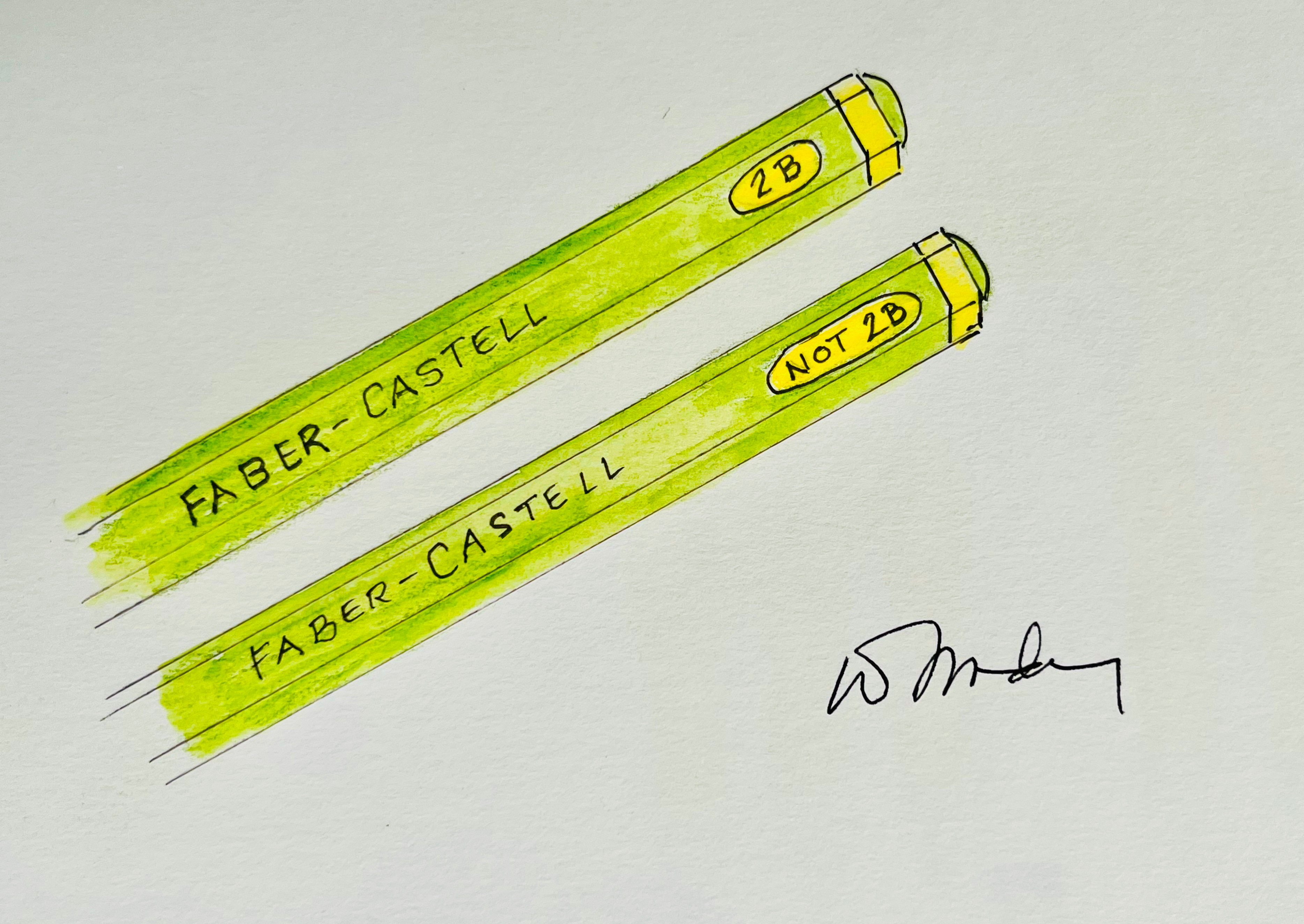
“Elbows up!,” the Canadian rallying cry, is taken from a statement by Gordie Howe –often referred to as “hockey legend Gordie Howe” and “Mr. Hockey” – who, at the time of his retirement, held almost every major record in the National Hockey League, and was known throughout his long career with the Detroit Red Wings (he scored his first goal in 1947 and his last in 1980) for his physical approach to the game. “You go into the corners with your elbows up,” he is reported to have said, “and if the other team gets rough, then WHAM!” A “Gordie Howe hat trick” is still defined as when a player, in a single game, scores a goal, makes an assist, and gets into a fight. Howe wasn’t particularly known as a pugilist – he was involved in only 22 fights in his 32-year career – but as veteran sports journalist Frank Orr once said of him, “he was the one guy without a weakness.”
How appropriate, then, that the new, third crossing of the Detroit River between Windsor, Ontario, and Detroit, Michigan, is named the Gordie Howe International Bridge. (The other two are the Detroit Tunnel and the Ambassador Bridge.) The agreement between the U.S. and Canada to build the bridge was signed in 2012, during Trump’s first term in office, and after much wrangling about who would pay for it, construction began in 2000. The bridge is now complete: it is, or was, scheduled to open early this year. The wrangling came when the Maroun family, which privately owns the Ambassador Bridge, successfully lobbied the Michigan legislature to veto appropriation of public funding for the bridge, because it would severely cut into the family’s profits from the Ambassador Bridge. As a result, Canada footed the entire cost of construction, for a total of $4.6 billion.
Early in February, Matthew Maroun (a major Republican donor) met with Donald Trump: on February 9, Trump announced that he would block the opening of the bridge “until the U.S. is fully compensated for everything we have given them,” them meaning Canada. It’s unclear what Trump meant by that. He claimed, falsely, that no U.S. steel or labour went into the bridge’s construction (in fact, a quarter of the steel and concrete used in the bridge came from United States, and 8,000 of the 12,000 workers employed on the bridge’s construction were American), and stated that the United States “must own at least half of the asset” (it already does: after Canada recoups its investment, Michigan and Canada split the income from the bridge 50-50).
Then Trump went on to make an even more bizarre statement. If Canada followed through with trade deals with China (as it has), wrote Trump, “the first thing China will do is terminate ALL Ice Hockey being played in Canada, and permanently eliminate the Stanley Cup.”
That prediction would certainly get Gordie Howe’s attention, were he still alive (he died in 2016, at the age of 88). On February 10, Mark Carney held a long conversation with Trump in which he explained the many misconceptions in Trump’s Truth Social post. Carney must have gone into the conversation with his elbows up, because there has been no further posts from Trump about blocking the bridge. Carney may therefore be said to have accomplished a Gordie Howe hat trick: he scored a goal for Canada, he assisted Drew Dilkens, the mayor of Windsor, who called Trump’s threat “insane” and “nonsensical,” and he got into a fight.
However, there remains a strong feeling in Canada that, although we may have won this battle, lines have been drawn and positions taken, and the future of the war is still uncertain. During the War of 1812-14, Thomas Jefferson declared that taking Canada would be “a mere matter of marching.” He was wrong then, but having a belligerent, unpredictable, and misinformed neighbour is always a troubling experience. We are no longer comfortable with our relationship with the United States, any more than the United States has been comfortable with Afghanistan since 9-11. “Carefree is no longer a word that applies to anything,” Dominick Dunne wrote at the end of “Mourning in New York.” “Months later, life goes on but anxiety persists, even during laughter. We have learned what it is like to be vulnerable.”
An excellent article about faux-king Trump and despicable neighbors. Scarcely an hour goes by that he does not embarrass and repulse the majority of us Americans. Despite our constitutional prohibition against non-native-born presidents, I think Carney would win a US election in a landslide.
I recommend this powerful political poem: https://krisfeliciano.substack.com/p/im-not-political-a-poem?r=6k8tno&utm_medium=ios